








Lectio Divina
Scripture Reading + Meditation + Prayer + Contemplation
What page, what passage of the inspired books of the Old and New Testaments is not the trues life? (Saint Benedict, The Rule of Saint Benedict/73:3)
——————————————————————————————————-
(Thireth Sunday in Ordinary Time, Mathew 22:37-39, 25 October 2026)
But the Pharisees hearing that he had silenced the Sadducees, came together: And one of them, asking him, tempng him: Master, which is the greatest commandment in the law? Jesus said to h the Lord thy God with thy whole heart, and with thy whole soul, and with thy whole mind. This the first commandment. And the second is like to this: Thou shalt love thy neighbor as thy commandments depend the whole law and the prophets (Mathew 22: 37-39).
MEDITATION — The Heart of Faith Is Love
The Gospel presents Jesus with a queson intended to test Him: “Master, whi commandment in the law?” Jesus responds by bringing the whole of the Law and the Prophets two inseparable commandments: love of God and love of neighbor. For Jesus, holiness is not m religious knowledge, external observance, or parcipaon in worship. Its deepest measure is a he towards God and made capable of loving others.
This teaching speaks directly to the spiritual life of Epiphany of the Lord Parish. Our faith the preservaon of church buildings, the maintenance of parish acvies, or attendance at Sund important, but their purpose is to help us become a people transformed by the love of Christ. Whether our worship makes us more aenve to one another, especially those whose needs are
Among us are elderly parishioners who experience the limitaons of age, people who families facing financial hardship, and individuals who carry the quiet burden of loneliness. S churches week after week while feeling that nobody truly knows their struggles. Others m withdrawn from parish life because of illness, mobility difficulties, changing circumstances, or th no longer belong.
The commandment to love our neighbor calls us to recognize Christ’s presence in these sick parishioner, a telephone call to someone living alone, praccal assistance for a struggling fam conversation with someone who has become distant from the Church can become concrete Gospel.
Love also challenges us to look beyond familiar circles of friendship and family. A parish Chrisan community when no one is treated as a stranger, no suffering person is forgoen, considered unimportant because of age, poverty, illness, or limited parcipaon.
Jesus declares that on these two commandments depend the whole Law and the Prop our Chrisan life must therefore be examined in the light of love. The strength of our parish is no by how many people gather within our churches, but by how faithfully the love of God flows thro another.
PRAYER — Lord, Teach Us to Love as You Love
Be close to those who experience loneliness, those who grieve the loss of loved ones, and those who feel disconnected from the Church. Open our eyes to people who may need a simple greeting, a listening ear, or an invitation to return to the community.
Bless families facing poverty and insecurity. Inspire us to respond generously, without judgment or indifference. Give us the courage to recognize that Christian charity is not merely an optional good deed but an essential expression of our love for You.
Lord, unite the members of St. Stephen and St. Thomas Aquinas, and all who belong to Epiphany of the Lord Parish. Heal divisions, overcome indifference, strengthen our communion, and help us welcome those who feel distant or forgotten. Amen.
CONTEMPLATION — Becoming a Community That Loves
Contemplation invites us to remain quietly in the presence of God and allow His Word to penetrate the deepest parts of our hearts. We do not merely think about the commandment of love; we allow Christ to reveal where our lives need conversion. In silence, let us ask ourselves:
- Do I love God with my whole heart, or have I allowed other concerns to take His place?
- Is my participation in the Eucharist making me more compassionate, patient, and generous?
- Who in our parish might be experiencing loneliness, sickness, poverty, grief, or neglect?
- Have I become so accustomed to seeing certain people that I no longer notice their suffering?
- What concrete act of love is Christ asking me to undertake this week?
Contemplation leads us beyond emotion into conversion. It asks us to see others with the eyes of Christ, to listen with His patience, and to respond with His compassion. The measure of our prayer is not simply how deeply we feel God’s presence in church, but how faithfully we carry that presence into our homes, streets, relationships, and parish community.
For Epiphany of the Lord Parish, this Gospel offers a renewed vision of mission. We are not simply a collection of individuals who attend Mass at the same place. We are called to become a communion of disciples in which worship leads to service, prayer leads to compassion, and faith leads to concrete acts of charity.
A parish that loves will seek out those who are absent, accompany those who are suffering, honor those who are elderly, support those who are poor, and welcome those who feel they no longer belong. It will recognize that even small gestures, offered with genuine love, can restore dignity and awaken hope.
Let us remain for a moment in silence before the Lord, allowing His commandment to become our own prayer:
Love God with your whole heart.
Recognize Christ in your neighbor.
Let no one be forgotten.
Let no one suffer alone.
Let our parish become a living witness to the love we celebrate at the altar.
The greatest commandment is not merely a rule to be obeyed; it is a way of life into which Christ invites us. When the love of God takes possession of our hearts, it becomes the source of our communion, the healing of our indifference, and the foundation of our parish mission.
The final fruit of this Lectio Divina is a simple but demanding commitment: to love God wholeheartedly by loving the people He places in our lives. For when love becomes the soul of our worship and the principle of our relationships, Epiphany of the Lord Parish becomes a clearer sign of Christ’s living presence in East Toledo.
A final resolution
Before the end of this day, I will choose one concrete act of love: to call someone who is lonely, visit someone who is sick, assist someone in need, reconcile with someone, or welcome someone who feels forgotten.
Lord Jesus, may we love You in prayer, recognize You in our neighbor, and serve You in the life of our parish. Amen.
Fraternally
Fr. John Peter Lazaar SAC
Pastor
Lectio Divina
Scripture Reading + Meditation + Prayer + Contemplation What page, what passage of the inspired books of the Old and New Testaments is not the truest guides for human life? …
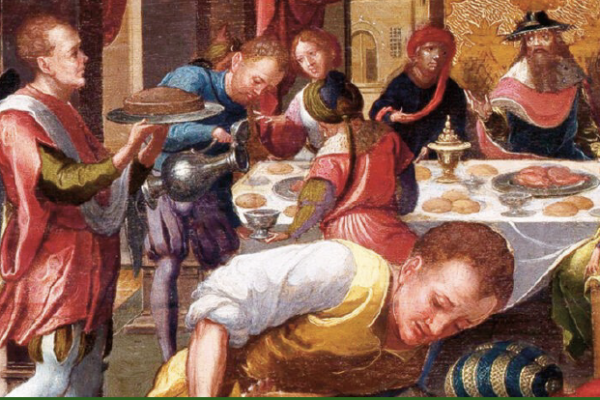
28th Sunday in Ordinary Time
God’s Eternal Plan is to Gather Humanity into the Wedding Feast of His Son: Where Divine Love Becomes the Communion of All (Twenty-Eighth Sunday in Ordinary Time, Mathew 22: 1-14,…
27th Sunday in Ordinary Time
Rejecting God’s Messengers Closes the Heart to Grace: Embracing Christ Makes Us Fruitful in His Kingdom (Twenty-Seventh Sunday in Ordinary Time, Mathew 21:33-43, 04 October 2026) In today’s Gospel passage (Mathew…

26th Sunday in Ordinary Time
True Faith is not Mere Religious Appearance: It Calls for the Conversion of Heart That Makes Conscience Obey God and Goodness (Twenty-Sixth Sunday in Ordinary Time, Mathew 21:28-32, 27 September…
25th Sunday of Ordinary Time
God’s Grace Calls Without Measure: He Rewards Beyond Human Calculation (Twenty-Fifth Sunday in Ordinary Time, Mathew 20:1-16a, 20 September 2026) Today’s passage from the Gospel (Mathew 20:1-16) recounts the parable…

24th Sunday in Ordinary Time
Forgiveness Becomes Truly Christian: When Mercy Exceeds Measure and Love Refuses to Keep Score (Twenty-Fourth Sunday in Ordinary Time, Mathew 18:21-35, 13 September 2026) Today, the Gospel talks to us…
23rd Sunday in Ordinary Time
Correction is Christian: When it is Rooted in Truth, Directed Toward Reconciliation, and Shaped by Restorative Love (Twenty-Third Sunday in Ordinary Time, Mathew 18:15-20, 06 September 2026) This Sunday’s Gospel…
22nd Sunday in Ordinary Time
Faith Becomes Authentic When the Heart Chooses God’s Will Over the Illusions of Human Wisdom (Twenty-Second Sunday in Ordinary Time, Mathew 16:21-27, 30 August 2026) Today’s Gospel passage (Mathew 16:21-27)…

21st Sunday of Ordinary Time
Faith Makes the Fragile Heart a Rock for Christ’s Church (Twenty First Sunday in Ordinary Time, Mathew 16: 13-20, 23 August 2026) This Sunday’s Gospel reading (Mathew 16:13-20) is a well-known…