








4th Sunday of Easter
The Baptism of the Lord Reveals What Nazareth Formed: The Quiet Greatness of God at Work in Ordinary Life
(Fourth Sunday of Easter, John 10: 1-10, 26 April 2026)
Today we are celebrating the Baptism of the Lord. A few days ago, we left Baby Jesus being visited by the Magi; today we find him as an adult on the banks of the Jordan. The Liturgy has us take a leap of some 30 years, 30 years about which we know one thing: they were years of hidden life, which Jesus spent with his family — some, firstly in Egypt, as a migrant to escape Herod’s persecution, the others in Nazareth, learning Joseph’s trade — with family, obeying his parents, studying and working. It is striking that the Lord spent most of his time on Earth in this way: living an or-dinary life, without standing out. We think that, according to the Gospels, there were three years of preaching, of miracles and many things. Three. And the others, all the others, were of a hidden life with his family. It is a fine mes-sage for us: it reveals the greatness of daily life, the importance in God’s eyes of every gesture and moment of life, even the simplest, even the most hidden. (Pope Francis, Angelus, 2021)
Dear Brothers and Sisters, The Mystery of Thirty Hidden Years-The liturgy today invites us to contemplate a remarka-ble silence in the life of Christ. Between the wonder of the Epiphany—when the Magi adored the Child—and the public ministry that begins on the banks of the Jordan, the Gospel places before us a vast stretch of hidden time. Nearly thirty years of the life of Jesus unfold quietly in Nazareth. The Gospel writers speak little about these years, yet their silence itself is eloquent. We often think of the life of Jesus primarily in terms of miracles, teachings, and the dramatic events that culminate in the Cross and Resurrection. Yet the greater portion of his earthly life was not spent preaching to crowds or performing wonders. It was spent in the ordinary rhythms of human existence: family life, work, prayer, and community. Jesus lived as a son in the home of Mary and Joseph, learning Joseph’s trade, growing in wisdom and stat-ure (cf. Luke 2:52). This hidden life reveals something profound about the way God works in history.
Divine grace does not always announce itself with extraordinary signs. Often it unfolds quietly within the unnoticed fab-ric of daily life. Nazareth becomes the school of the Incarnation, where the Son of God embraces the simplicity of hu-man existence. In this quiet village the eternal Word sanctifies the ordinary, showing that the path of holiness often runs through the humble routines of work, family, and fidelity to small duties.
A Pastoral Anecdote: The Hidden Carpenter-There is a simple story told about a cathedral in Europe that took many decades to build. Pilgrims often admired its magnificent towers, its stained glass, and its intricate carvings. One day a visitor asked an elderly man who lived in the nearby village, “Did you work on this cathedral when it was being built?” The old man smiled quietly and replied, “Yes, I did.” “What part did you build?” the visitor asked, expecting to hear about one of the great visible structures. The old man pointed toward the high roof beams that no one could see from the ground and said, “I carved the wooden supports that hold up the roof. They were placed inside the structure where no one would ever see them.” The visitor seemed surprised. “Does it not trouble you that your work is hidden?” The old craftsman answered gently, “No. The people may not see it—but God sees it. And without those beams, the cathedral would not stand.”
In many ways, the hidden years of Jesus in Nazareth resemble those unseen beams of the cathedral. The world remem-bers the three years of preaching, miracles, and the drama of Calvary and Easter. But the greater part of his earthly life was lived quietly, faithfully, within the ordinary rhythms of family and work.
Just as the hidden beams support the beauty of the cathedral, the quiet years of Nazareth supported the visible mission of Christ. They remind us that the unnoticed acts of love, patience, and fidelity in our daily lives—especially in our homes, our workplaces, and our parish—are not wasted. They are the hidden structure upon which the Kingdom of God quietly rises. And perhaps that is one of the deepest lessons of Nazareth: God often builds his greatest works through lives that the world scarcely notices.
The Baptism at the Jordan: Manifestation of a Hidden Mystery-When Jesus finally appears at the Jordan River to be baptized by John, the heavens open and the voice of the Father declares: “You are my beloved Son; with you I am well pleased” (Luke 3:22). The Spirit descends upon him like a dove. What had been hidden for thirty years now begins to be revealed. The Baptism of the Lord is therefore not simply a ritual moment but a theological unveiling. The One who lived quietly in Nazareth is revealed as the beloved Son of the Father. The hidden years were not empty years; they were years of formation, preparation, and silent obedience.
Philosophically, we may say that Nazareth represents the formation of being, while the Jordan marks the beginning of mission. Before Jesus acts publicly, he first lives deeply. Before he proclaims the Kingdom, he dwells in communion with the Father within the ordinary circumstances of human life. This rhythm reflects a universal principle of the spiritual life: agere sequitur esse—action follows being. What we do flows from who we are.
Thus, the baptism at the Jordan reveals what Nazareth formed. The quiet fidelity of those hidden years becomes the foundation for the public ministry that will follow.
The Theology of Hiddenness: God’s Way of Working-The hidden life of Jesus teaches us something about the nature of divine action. In a world fascinated with visibility, achievement, and recognition, the Gospel proposes a paradox: God often works most powerfully in what appears small and unnoticed. The Incarnation itself is already a sign of this para-dox. The infinite God becomes a child. The King of the universe grows up in a humble village. The Savior of the world spends decades in obscurity before beginning his mission. This reveals what we might call the theology of hiddenness.
God’s grace often operates beneath the surface of history, quietly shaping hearts and preparing souls. The Kingdom of God, Jesus says, is like a seed hidden in the soil or like yeast working invisibly within dough (Mathew 13:31–33). The hidden years of Nazareth therefore remind us that holiness is not measured by visibility but by fidelity. The greatness of Christ was already present long before the crowds gathered to hear him preach. His obedience in the small things of daily life was already the unfolding of the divine mission.
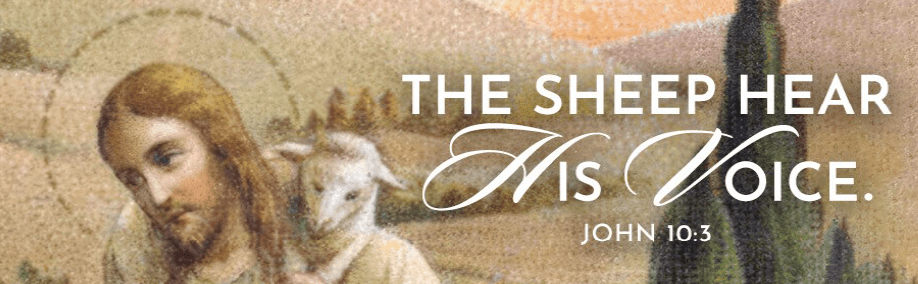
The Good Shepherd and the Door of Life-In the Gospel proclaimed today, Jesus speaks of himself as the shepherd and the door through which the sheep enter into life (John 10:1–10). “I came that they may have life, and have it abundantly.” This image of the shepherd resonates deeply with the mystery of Christ’s hidden life. A shepherd does not dominate from a distance; he lives among the sheep, guiding them gently and patiently. Likewise, Jesus shares fully in our human condition. His years in Nazareth express the closeness of God to ordinary human life. The shepherd knows his sheep, and the sheep recognize his voice. This knowledge is not merely intellectual but relational. It is the intimacy of presence, the familiarity born of living together. Christ’s hidden years in Nazareth reveal precisely this closeness of God to humanity. The Good Shepherd is not a distant ruler but one who walks alongside his people. The door of the sheepfold represents the path to authentic life. To enter through Christ is to discover the fullness of life that flows from communion with God. His presence opens the way to a life that is not defined by worldly success but by participation in divine love.
The Spiritual Meaning of Ordinary Life-Pope Francis reminds us that the hidden life of Jesus reveals “the greatness of daily life, the importance in God’s eyes of every gesture and moment of life, even the most simple and hidden.” This insight carries profound pastoral significance for our own lives. Most of us will never perform extraordinary deeds that attract public attention. Our days are filled with simple tasks: caring for family members, working faithfully at our responsibilities, enduring illness or loneliness, offering small acts of kindness. Yet the Gospel assures us that these seemingly ordinary moments are not insignificant in the eyes of God. In Nazareth, Jesus sanctified the ordinary. Every gesture of work, every act of obedience, every moment of prayer became part of the mystery of redemption. Philosophically speaking, the ordinary becomes sacramental. Daily life becomes the place where grace unfolds and where the human person is gradually transformed by love. The holiness of life does not depend on dramatic achievements but on fidelity to the presence of God in the present moment.
Nazareth and the Challenges of Our Neighborhood-This message speaks deeply to the realities of our own parish and neighborhood. Many people today experience the quiet burdens of life: old age, sickness, loneliness, and the sadness of empty pews where once communities were vibrant. Families move away, neighborhoods change, and many feel forgotten. The hidden life of Jesus offers a profound consolation here. The quiet struggles of daily life are not invisible to God. In Nazareth, the Son of God himself lived within the simplicity of ordinary existence. He understands the hidden sacrifices that shape human life. For those who care for aging parents, for those who endure illness, for those who feel alone, Nazareth speaks a word of dignity and hope. The quiet fidelity of daily life is precious before God. Every act of love, every moment of patience, every silent prayer participates in the mystery of Christ’s own hidden life.
The Priest and the Hidden Work of Grace-For the Church and for those entrusted with pastoral ministry, the hidden life of Nazareth also carries an important lesson. Ministry is not only about visible success or large gatherings. Much of the work of the Gospel unfolds quietly—in listening to a suffering person, visiting the sick, accompanying those who feel forgotten, praying with those who are searching for hope. The priest, like the Good Shepherd, often walks with his people in hidden ways. The deepest moments of ministry may occur far from public attention: in hospital rooms, in quiet conversations, in the silent offering of prayer. Thus, the Church continues the mystery of Nazareth whenever she accompanies the ordinary lives of the faithful with compassion and grace.
Living the Mystery of Nazareth Today-The Baptism of the Lord reminds us that the hidden years were not wasted years. They were the quiet foundation of Christ’s mission. Nazareth prepared the heart that would proclaim the Kingdom, heal the sick, and ultimately give his life for the salvation of the world. In the same way, our own hidden moments—our daily responsibilities, our quiet struggles, our unnoticed acts of love—are not meaningless. They are the place where God quietly forms our hearts. If we learn to see our lives through the lens of Nazareth, we discover that holiness is not distant from us. It is already present in the faithful living of ordinary days. The Good Shepherd continues to call us through the door that leads to life. He invites us to trust that God is at work even in the hidden places of our lives.
Cumulative summary-The Baptism of the Lord reveals that the public mission of Jesus flows from the quiet formation of Nazareth, where the Son of God lived thirty years in humble obedience, work, and family life. Those hidden years remind us that God often prepares his greatest works in silence and simplicity. The Gospel teaches that holiness is not measured by visibility or extraordinary achievements, but by fidelity in the ordinary moments of life. In Nazareth, Christ sanctified daily work, family life, and the small duties that shape human existence. This message offers hope to all who live quietly amid the struggles of aging, sickness, loneliness, and changing neighborhoods. Even when life seems unnoticed or burdensome, God is present in those hidden sacrifices. Like the Good Shepherd who knows his sheep, Christ walks closely with us in the ordinary paths of life. Our small acts of love, patience, and service become part of God’s quiet work of grace. The hidden life therefore teaches us that the ordinary can become holy when lived in communion with God. In the silent faithfulness of daily life, the Kingdom of God is already growing among us.
Concluding Words: The Quiet Greatness of God-The Baptism of the Lord reveals what Nazareth formed. The hidden years were the silent preparation for the revelation of the Son of God. In them we see the quiet greatness of God at work within the ordinary. For us, this mystery becomes a source of hope. Our daily lives—often simple, sometimes difficult, sometimes unnoticed—are not outside the plan of God. When lived in faith, they become places where grace grows quietly and where the presence of Christ takes root. Nazareth teaches us that the path to holiness is not always dramatic. It is often hidden, patient, and faithful. And yet, within that hiddenness, the life of God is already unfolding—quietly preparing the dawn of resurrection in the ordinary moments of our lives.
Fraternally,
Fr. John Peter, Pastor