




22nd Sunday in Ordinary Time
Faith Becomes Authentic When the Heart Chooses God’s Will Over the Illusions of Human Wisdom
(Twenty-Second Sunday in Ordinary Time, Mathew 16:21-27, 30 August 2026)
Today’s Gospel passage (Mathew 16:21-27) is the continuation of last Sunday’s, which highlighted the profession of faith of Peter, the “rock” upon which Jesus wishes to build his Church. Today, in stark contrast, Matthew shows us the reaction of the same Peter when Jesus reveals to his disciples that He will have to suffer, be killed, and rise again (Mathew 16:21). Peter takes the Teacher aside and reproaches Him because this — he says — cannot happen to Him, to Christ. But Jesus, in turn, rebukes Peter with harsh words: “Get behind me, Satan! You are a hindrance to me; for you are not on the side of God, but of men” (Mathew 16:23). (Pope Francis, Angelus, 2017)
Faith Must Move Beyond What We Want God to Be-Last Sunday, we heard Peter make one of the greatest professions of faith in the Gospel: “You are the Christ, the Son of the living God” (Matthew 16:16). Jesus praised Peter and entrusted to him a unique responsibility in the building of His Church. Peter appeared to understand who Jesus was. But today, only a few verses later, we encounter another Peter. The Peter who could confess Jesus as the Christ could not yet accept what being the Christ would actually mean. When Jesus begins to explain that He must go to Jerusalem, suffer, be killed, and be raised on the third day, Peter takes Him aside and says, in effect: Lord, this cannot happen to You. Peter believed in Jesus, but he still wanted to determine what Jesus’ mission should look like. That is why Jesus responds so strongly: “Get behind me, Satan! You are a hindrance to me; for you are not on the side of God, but of men” (Matthew 16:23). These words are startling. The same Peter whom Jesus had called “rock” is now called a “hindrance.” The difference is not that Peter has stopped loving Jesus. Rather, Peter’s love has not yet been purified of his own expectations. He loves Christ, but he wants Christ to follow Peter’s understanding of success, power, security, and glory. The Gospel therefore confronts a profound question: Do we truly seek God’s will, or do we merely ask God to bless our will? Authentic faith begins when we allow God to be God.
The Tension Between Divine Wisdom and Human Wisdom-Peter’s problem is deeply human. Human wisdom naturally seeks the path of security, success, comfort, and recognition. We prefer resurrection without the cross, victory without sacrifice, achievement without struggle, and glory without suffering. But God’s wisdom often takes us through a different path. The Cross reveals something that human wisdom frequently refuses to accept: love is not measured by how much we gain, but by how much we are willing to give. Peter could imagine a Messiah who would conquer enemies, establish His kingdom, and demonstrate divine power. He could not yet imagine a Messiah who would be rejected, humiliated, crucified, and apparently defeated. Yet Jesus’ apparent defeat would become the very place of God’s victory. This is why St. Paul would later proclaim that the wisdom of God can appear foolish to the world. The Cross overturns our ordinary calculations. We often measure life by numbers: income, possessions, influence, attendance, achievements, recognition, and success. God measures differently. He sees fidelity. He sees sacrifice. He sees hidden love. He sees the person who continues to believe when there is little visible evidence that anything is changing. The world asks, “What have you achieved?” Christ asks, “Whom have you loved?” The world asks, “How much have you gained?” Christ asks, “How much have you given?” The world asks, “How comfortable is your life?” Christ asks, “Have you taken up your cross and followed me?”
Faith Is Not the Right to Correct God-Peter’s mistake is not that he lacks faith. His mistake is that he tries to reshape God’s plan according to his own expectations. This is one of the subtle temptations of religious faith. Sometimes we do not reject God. Instead, we try to negotiate with Him. We say: “Lord, I believe in You, but please do not ask too much of me.” “Lord, I trust You, but I need everything to happen according to my timetable.” “Lord, I will follow You, provided the path does not become too difficult.” “Lord, I accept Your will, as long as Your will agrees with mine.” Peter teaches us that faith is not simply believing that God exists; faith is surrendering our right to control God. The authentic believer eventually reaches the point where he can say: “Lord, I do not understand everything You are doing, but I trust You.” That is mature faith. There is a great difference between saying, “God, do what I want,” and saying, “God, make my heart willing to do what You want.” The first is religion organized around ourselves. The second is discipleship.
“Get Behind Me”: The Proper Place of a Disciple-There is an important detail in Jesus’ words to Peter: “Get behind me.” Jesus is not merely telling Peter to go away. He is putting Peter back in the proper position of a disciple. The disciple belongs behind the Master. Peter had momentarily reversed the order. He wanted Jesus to follow his vision. Jesus reminds him: You are the disciple; I am the Lord. This is a beautiful spiritual principle. We spend much of our lives trying to make God follow us. We make plans and then ask God to approve them. We choose a direction and then ask God to bless it. We establish our priorities and then try to fit prayer somewhere into the schedule.But discipleship means reversing the order. We begin with God. We ask: “Lord, what do You want from me?” “Where are You leading me?” “What must I surrender?” “What kind of person are You calling me to become?” Only then can we truly follow. Faith becomes authentic when the heart stops saying, “My will be done,” and learns to pray, “Thy will be done.”
The Cross Is Not a Sign of God’s Absence-Jesus does not hide the Cross from His disciples. He tells them plainly that suffering is part of His mission. This is important because we can easily interpret suffering as evidence that God has abandoned us. When sickness comes, we ask: “Where is God?” When financial difficulties arise, we ask: “Why is God allowing this?” When a loved one dies, we wonder: “Where was God when we needed Him?” When our prayers seem unanswered, we are tempted to believe that heaven has become silent.But the Gospel gives us another perspective. The Cross does not mean that God is absent. The Cross reveals that God can be present precisely where human beings experience abandonment. Christ does not save humanity by avoiding suffering. He enters into it. Therefore, Christian faith does not promise us a life without crosses. It promises us that no cross has the final word. The Cross leads to Resurrection. This is particularly important for those who experience the hidden crosses of ordinary life. There are people who come to Mass carrying burdens nobody else knows. Some carry loneliness. Some live with the pain of old age. Some struggle with sickness. Some worry about children or grandchildren. Some face financial hardship. Some feel forgotten. Some experience the sadness of watching familiar faces disappear from the pews. Some wonder why participation in parish life seems to be declining and why the community they once knew feels different. These realities can tempt us to measure the Church only by what we can see. But the Gospel asks us to look deeper. A parish may have fewer people in the pews, yet those who remain may be carrying an enormous amount of faith. A person sitting quietly at Mass may be fighting a spiritual battle invisible to everyone else. An elderly parishioner who faithfully comes to church despite physical limitations may be preaching a sermon simply by being present. A person who continues to pray after years of disappointment may possess a faith stronger than any outward measure of success. God’s kingdom cannot be measured merely by statistics. God sees the hidden fidelity of the human heart.
“Whoever Loses His Life for My Sake Will Find It”-Jesus then moves from His own Cross to the cross of the disciple: “If anyone would come after me, let him deny himself and take up his cross and follow me” (Matthew 16:24). These words challenge the spirit of our age. Modern culture often tells us: Protect yourself. Promote yourself. Express yourself. Put yourself first. Avoid suffering. Choose whatever makes you happy. Jesus says something radically different: “Deny yourself.” This does not mean despising oneself. Christianity does not teach that human beings are worthless. Every person possesses immeasurable dignity because every person is created in the image of God. Self-denial means refusing to make the self the center of reality. It means that my desires are not automatically the highest authority. It means that love sometimes requires sacrifice. It means that forgiveness may cost me my pride. It means that serving another person may cost me my time. It means that remaining faithful may require perseverance when leaving would be easier. It means that caring for an aging parent, visiting someone who is lonely, helping a struggling neighbor, welcoming someone who feels excluded, or quietly supporting the Church may require sacrifices that nobody applauds. Yet this is precisely where Christian discipleship becomes real. The Cross is where love becomes concrete.
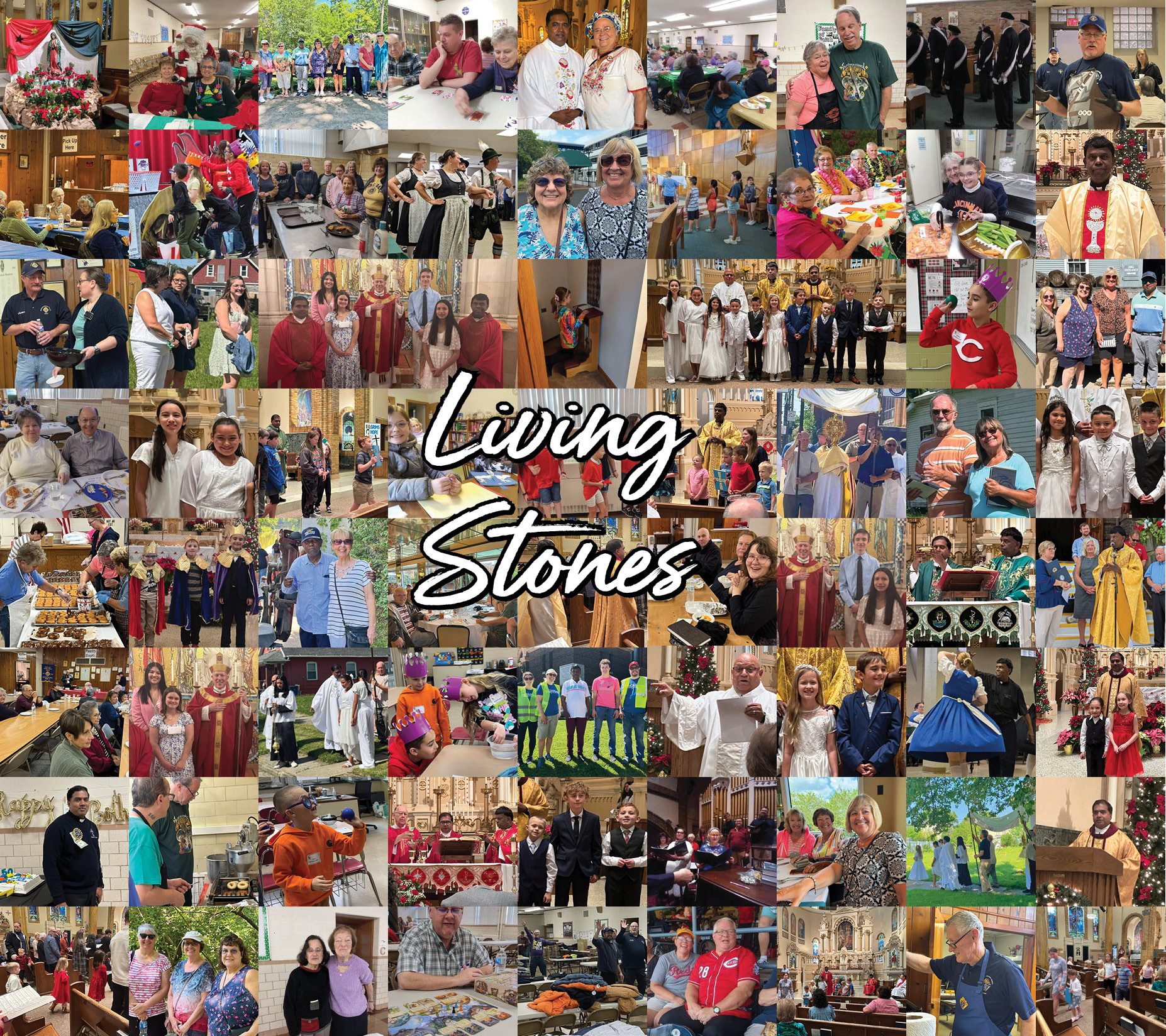
A Parish Is Strong When Its People Carry One Another’s Crosses-The Gospel also speaks directly to parish life. A parish is not simply a building where people attend Mass. It is a community of disciples who are called to walk together toward Christ. If someone is lonely, the parish must become a place of communion. If someone is sick, the parish must become a place of compassion. If someone is poor, the parish must become a place of generosity. If someone has become distant from the Church, the parish must become a place of welcome rather than judgment. If an elderly person feels forgotten, the parish must become a family. If young people are searching for meaning, the parish must offer not merely activities but the truth of the Gospel. If someone is carrying a hidden cross, we must not make that person carry it alone. The Christian community is strongest not when everyone is comfortable, but when everyone knows that they belong. Sometimes we ask, “Why are there empty pews?” Perhaps another question is equally important: “Who is missing, and what can I do to help bring them home?” Instead of complaining about those who no longer participate, perhaps we should pray for them, call them, visit them, listen to them, and welcome them. Instead of asking only what the parish can give me, perhaps we should ask: “What can I give to Christ through this parish?” That is the movement from consumer Christianity to missionary discipleship.
The Illusion of Human Wisdom-The Gospel warns us about the illusion of human wisdom. Human wisdom is not bad. Reason, intelligence, education, experience, and careful judgment are gifts from God. But human wisdom becomes dangerous when it convinces us that we can understand everything without God. We begin to believe that whatever is successful must be good. Whatever is popular must be true. Whatever is comfortable must be right. Whatever is difficult must be wrong. But Jesus exposes these illusions. He asks: “For what will it profit a man if he gains the whole world but forfeits his life?” (Matthew 16:26). The question is existential. What is the value of possessing everything if we lose ourselves? What is the value of success if we lose our soul? What is the value of recognition if we lose our integrity? What is the value of comfort if we lose compassion? What is the value of having everything we want if we no longer know what God wants? The tragedy of life is not that we may fail to gain everything. The greater tragedy is that we may gain what the world celebrates and lose what God considers precious.
Conclusion: Let God Have the Last Word-Today’s Gospel places two wisdoms before us: the wisdom of the world and the wisdom of the Cross. The wisdom of the world tells us to preserve ourselves at all costs. The wisdom of Christ teaches us that true life is found in self-giving love. The wisdom of the world says that suffering is meaningless. The Cross reveals that suffering united with love can become redemptive. The wisdom of the world tells us to control our future. Faith teaches us to entrust our future to God. The wisdom of the world asks, “What will I gain?” Jesus asks, “What will you give?” Peter had to learn that faith is not authentic merely because we recognize Jesus as Christ. Faith becomes authentic when we allow Jesus to become Lord of our choices, Lord of our priorities, Lord of our suffering, Lord of our future, and Lord of our will. Therefore, the question for us this Sunday is not simply: “Do I believe in Jesus?” It is deeper: “Am I willing to let Jesus change the way I think, the way I choose, the way I suffer, the way I love, and the way I live?” The Cross teaches us that God’s wisdom may not always look successful according to the standards of the world. But the Cross also teaches us that what appears to be defeat in the eyes of the world can become victory in the hands of God. So let us pray for the grace to move from Peter’s first confession to Peter’s mature discipleship—from merely knowing who Christ is to faithfully following where Christ leads.
Fraternally,
Fr. John Peter Lazaar SAC,
Pastor