







15th Sunday of Ordinary Times
The Word of God Roots and Anchors the Heart: Enabling It to Withstand Life’s Storms
(Fifteenth Sunday in Ordinary Time, Mathew 13:1-23, 12 July 2026)
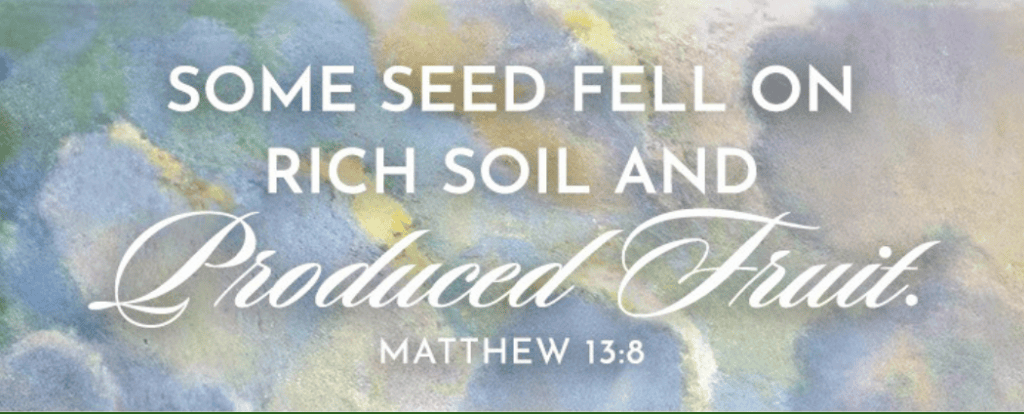
This Sunday’s Gospel (Mathew 13:1-23) shows us Jesus preaching on the shore of the Lake of Galilee. The first story he tells is an introduction to all the parables: that of the Sower, who sows his seed unsparingly on every type of soil. And the real protagonist of this parable is actually the seed, which produces more or less according to the type of soil upon which it falls. The first three areas are unproductive: along the path the seed is eaten by birds; on rocky ground the sprouts are scorched and wither away because they have no roots; among the briars the seed is choked by thorns. The fourth piece of ground is good soil, and only there does the seed take root and bear fruit. (Pope Francis, Angelus, 2014)
Dear Brothers and Sisters in Christ Jesus, Every Human Heart Is Looking for Firm Ground-We live in a world that changes faster than our hearts can understand. Technologies advance overnight. Opinions replace truths. Relationships become fragile. Families struggle under economic burdens. Loneliness silently invades homes. Many parish pews that were once filled now remain empty. Some have drifted away from the Church; others have become indifferent; still others are overwhelmed by illness, old age, disappointments, addictions, anxiety, or the relentless pressure of modern life. Beneath all these visible problems lies one invisible question: Where is my heart anchored? An anchor does not prevent storms from coming, but it prevents the ship from drifting into destruction. Likewise, faith does not remove every suffering, but it keeps the soul firmly united to Christ when life becomes turbulent.
Today’s Gospel presents Jesus as the Divine Sower. He scatters His seed generously over every kind of ground. Pope Francis reminds us that the true protagonist of this parable is the seed itself, which bears fruit according to the condition of the soil upon which it falls. God’s Word never lacks power; what differs is the openness of the human heart. The question Jesus asks each one of us today is not, “How many storms have you endured?” but rather, “What kind of soil is your heart?”
Pastoral Anecdote: The Old Oak Tree-A young boy once asked his grandfather why an enormous oak tree standing at the edge of their farm had survived every storm for more than a hundred years, while several younger trees had been uprooted after a single violent wind. Smiling, the grandfather handed him a small shovel and said, “Go and look beneath the ground.” The boy dug carefully around one of the fallen trees and found only shallow roots spreading just beneath the surface. Then they walked to the old oak. They could not uncover all its roots because they reached so deep into the earth that they disappeared from sight. The grandfather gently explained, “People admire the branches because they can see them. But the tree survives because of the roots they cannot see.” Years later, the boy became a parish priest. He often remembered his grandfather’s lesson whenever he visited the sick, comforted grieving families, or celebrated funerals. He noticed that those who had quietly nourished their faith through daily prayer, faithful Sunday Mass, Scripture, the Eucharist, and the Sacrament of Reconciliation were not free from suffering. They still wept, experienced loss, and faced uncertainty. Yet they were not overcome by despair. Their hidden roots in Christ held them firm. Others, who had built their lives only on success, possessions, or passing emotions, often found themselves spiritually adrift when hardship came.
Brothers and sisters, the same is true for us. God is less concerned with how impressive our lives appear than with how deeply His Word has taken root within our hearts. When the Gospel becomes the soil of our lives and Christ becomes our deepest anchor, the storms of life may bend us, but they will never uproot us. Hearts rooted in Christ remain steadfast because the strength that sustains them comes not from themselves, but from the One who never fails.
The Human Heart Is the Soil of Eternity-Every civilization has attempted to explain the human person. Philosophers have described humanity as rational, political, social, economic, or technological beings. Yet Christianity reveals something deeper: the human heart is created to become the dwelling place of God. Saint Augustine expressed this profound truth when he prayed: “Our hearts are restless until they rest in You.” The soil in today’s Gospel symbolizes the interior landscape of every person. Externally two individuals may appear identical, yet internally one possesses fertile faith while the other has become hardened by resentment, pride, or despair. Jesus never blames the seed. The seed is perfect. The Sower is generous. Only the soil differs. This is both comforting and challenging. God never ceases speaking. The real question is whether we still possess hearts capable of listening. Many people today hear countless voices every day—social media, political arguments, entertainment, advertising—but hear very little of God. Noise has become the enemy of contemplation. When silence disappears, faith slowly weakens.
Four Soils That Still Exist in Every Parish-The four soils described by Jesus are not merely four categories of people. They represent four spiritual conditions that can exist within every Christian—and often within the same person at different moments of life.
The Path: Hearts Hardened by Indifference-The first soil represents those whose hearts have become like packed earth. Repeated disappointments. Unforgiven wounds. Endless distractions. Materialism. Pride. The Word cannot penetrate because the surface has become closed. Many people no longer reject God intellectually; they simply ignore Him practically. God has become unnecessary. Prayer becomes optional. Sunday Eucharist becomes occasional. Faith becomes cultural rather than personal. This quiet indifference is perhaps the greatest spiritual illness of our age.
The Path: Hearts Hardened by Indifference-The first soil represents those whose hearts have become like packed earth. Repeated disappointments. Unforgiven wounds.
Endless distractions. Materialism. Pride. The Word cannot penetrate because the surface has become closed. Many people no longer reject God intellectually; they simply ignore Him practically. God has become unnecessary. Prayer becomes optional. Sunday Eucharist becomes occasional. Faith becomes cultural rather than personal. This quiet indifference is perhaps the greatest spiritual illness of our age.
Rocky Ground: Faith Without Deep Roots-The second soil receives the Word enthusiastically. Emotion replaces conviction. Excitement replaces discipleship. When difficulties arrive, faith quickly disappears. A Christianity built only upon feelings cannot survive suffering. The storms of unemployment, sickness, grief, family conflicts, addictions, or loneliness expose whether faith has truly taken root. Roots grow unseen. Likewise, authentic prayer, Eucharistic devotion, Scripture reading, Confession, and daily fidelity quietly strengthen the soul long before crises arrive.
Thorny Ground: Hearts Choked by Worldly Anxiety-The third soil perhaps describes modern society most accurately. Jesus names two dangerous thorns: the cares of the world; the deceitfulness of riches. Notice that Jesus does not condemn work or possessions. He warns against allowing them to occupy the throne of the heart. Anxiety gradually replaces trust. Success replaces holiness. Consumption replaces communion. Many people possess more comforts than previous generations yet less peace. The human heart was never created to be filled by possessions. Only God fills the infinite depth of the soul.
Good Soil: Hearts That Bear Fruit-Good soil is not perfect soil. It is receptive soil. It welcomes the seed. It protects the seed. It nourishes the seed. It perseveres until harvest. Holiness is not extraordinary talent. Holiness is extraordinary openness to God’s grace.
Christ Alone Anchors the Heart-The title of today’s reflection speaks of hearts anchored in Christ. An anchor functions beneath the surface. No one sees it during calm weather. Its importance becomes evident only during storms. Likewise, our deepest spiritual life often remains hidden from public view. People may admire achievements, careers, education, or popularity. God looks beneath the surface. He searches for roots. He searches for anchors. Many people ask God to remove every difficulty. Yet often God chooses something greater. Instead of calming every storm immediately, He strengthens the soul to remain faithful within the storm. The Christian hope is therefore not the absence of suffering but the presence of Christ. As the Letter to the Hebrews beautifully proclaims: “We have this hope as an anchor for the soul, firm and secure” (Hebrews 6:19). When Christ becomes the anchor of our hearts, disappointments cannot destroy us. Failures cannot define us. Losses cannot empty us. Death itself cannot conquer us.
The Parish Must Become Good Soil-This Gospel speaks not only to individuals but also to our parish community. Every parish desire growth. We hope for fuller pews, stronger families, generous volunteers, active youth, and renewed vocations. Yet Jesus reminds us that true renewal begins beneath the surface. Programs alone cannot transform hearts. Buildings cannot produce holiness. Committees cannot substitute for conversion. Only hearts rooted in Christ become fruitful disciples. Perhaps someone has quietly stopped attending Mass because of discouragement. Perhaps an elderly parishioner feels forgotten. Perhaps a struggling family carries burdens no one else sees. Perhaps young people are searching for meaning in a culture that offers endless distractions but little hope. The Church is called to become fertile soil where every wounded heart encounter mercy, truth, friendship, and the living Christ. When visitors enter our parish, they should discover not merely beautiful buildings but living witnesses whose lives proclaim: “Christ lives here.”
Cultivating the Soil of the Heart-Good farmers never blame the seed. They prepare the soil. Likewise, every Christian is invited to cultivate the heart through ordinary but faithful practices. Prayer softens hardened ground. Confession removes stones. The Eucharist nourishes hidden roots. Scripture plants divine wisdom. Acts of charity uproot selfishness. Silence allows God to speak. Daily perseverance protects the growing seed. Grace never replaces our cooperation. Rather, grace transforms what we willingly offer. God continually sows. The question remains whether we continually receive.
Cumulative Summary- Today’s Gospel reminds us that God continually sows His living Word into every human heart, but the fruit it bears depends upon the condition of the soil within us. A heart anchored in Christ is not spared the storms of life, but it remains steadfast because it is deeply rooted in faith, hope, and love. The parable of the Sower invites us to examine whether our hearts have become hardened by indifference, shallow through lack of spiritual depth, or choked by worldly anxieties and attachments. Christ alone can cultivate our hearts into fertile soil where His grace flourishes abundantly. Through prayer, the Eucharist, Sacred Scripture, the Sacrament of Reconciliation, and daily acts of charity, our roots grow stronger and our faith becomes resilient. The renewal of our parish begins not with external programs but with interior conversion and hearts transformed by God’s Word. As disciples, we are called to become living witnesses who bear lasting fruit in our families, our parish, and our community. When Christ is the anchor of our souls and His Word takes deep root within us, no trial can separate us from His love or diminish our hope. May we therefore open our hearts to the Divine Sower, allowing His Word to shape our lives so that we may yield a harvest of holiness, peace, and enduring faith for the glory of God.
Conclusion: Becoming a Harvest for the Kingdom-Dear brothers and sisters, Every Sunday God sows His Word again. Every Eucharist place is another seed into the soil of our hearts. Some seeds may seem forgotten. Some appear hidden. Yet hidden seeds often become the greatest harvests. Our world does not need Christians who merely hear the Gospel. It needs Christians whose lives have become the Gospel made visible. If Christ is the anchor of our hearts, no storm can separate us from His love. If His Word takes root within us, we shall not merely survive the trials of life—we shall bear fruit that remains for eternity. Let us therefore ask the Holy Spirit today to remove whatever hardens our hearts, to deepen our roots in Christ, to clear away the thorns of anxiety and selfishness, and to make each of us fertile soil where God’s Word may flourish abundantly. Then our families will become stronger. Our parish will become more welcoming. Our faith will become more joyful. And amid every storm that life may bring, our hearts—anchored firmly in Christ—will remain unshaken, bearing thirtyfold, sixtyfold, and a hundredfold for the glory of God.
Fraternally,
Fr. John Peter Lazaar SAC, Pastor