








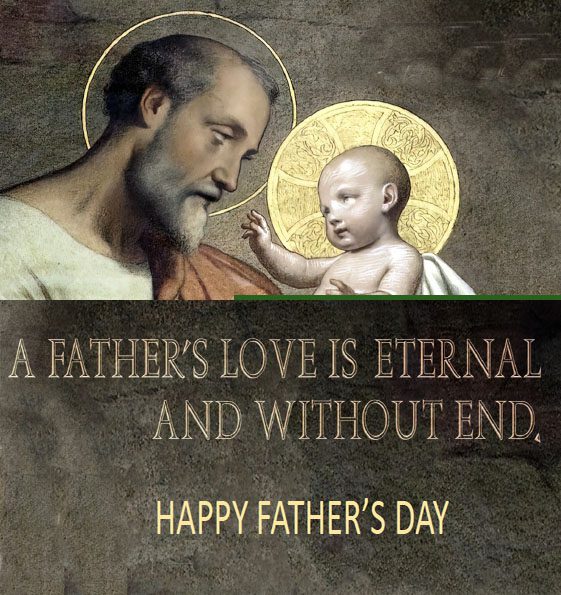
12th Sunday in Ordinary Time & Father’s Day
In Christ: Fear Dissolves and Truth Emboldens the Heart for Mission
(Twelfth Sunday in Ordinary Time, Mathew 10:26-33, 21 May 2026)
In this Sunday’s Gospel (Mathew 10:26-33) the invitation that Jesus addresses to His disciples resonates: to have no fear, to be strong and confident in the face of life’s challenges, as he forewarns them of the adversities that await them. Today’s passage is part of the missionary discourse, with which the Teacher prepares the Apostles for their first experience of proclaiming the Kingdom of God. Jesus persistently exhorts them to “have no fear”. Fear is one of the most terrible enemies of our Christian life. Jesus exhorts: “have no fear”, “fear not”. And Jesus describes three tangible situations that they will find themselves facing. (Pope Francis, Angelus, 2020)
The Age of Fear and the Gospel of Courage-We live in a world deeply marked by fear. People fear economic uncertainty, illness, loneliness, rejection, failure, violence, and an uncertain future. Communities fear decline, families fear fragmentation, and even believers sometimes fear the challenges that confront the Church. Fear has become one of the dominant experiences of modern humanity.
Yet in today’s Gospel (Matthew 10:26–33), Jesus speaks a word that cuts through the darkness of fear: “Do not be afraid.” Three times in this short passage Jesus repeats this command. It is not merely a comforting phrase; it is a divine invitation to freedom. Christ does not deny the existence of danger, suffering, opposition, or persecution. Rather, He teaches His disciples how to live courageously in the midst of them. The Gospel belongs to what Scripture scholars call the “Missionary Discourse.” Jesus is preparing His apostles for their first mission of proclaiming the Kingdom of God. He knows that they will encounter misunderstanding, rejection, ridicule, and even hostility. Yet before sending them forth, He gives them a spiritual foundation: fear must never govern the heart of a disciple.
Fear imprisons; faith liberates. Fear closes doors; faith opens horizons. Fear focuses on human limitations; faith rests upon divine providence. For our parish community, which faces its own challenges, uncertainties, and concerns about the future, Christ’s words arrive as both consolation and mission: “Do not be afraid.”
A Pastoral Anecdote: The Lighthouse Keeper Who Stayed at His Post-Along a rugged coastline stood an old lighthouse that guided ships safely through dangerous waters. One stormy night, fierce winds battered the shore, waves crashed against the rocks, and darkness covered the sea. The lighthouse keeper received word that a massive storm was approaching and that some people were abandoning their homes and seeking shelter inland. For a moment, fear entered his heart. He thought, “What if the lighthouse is struck? What if I am harmed?” Yet he remembered his duty. If he left his post, ships navigating the storm could crash against the rocks and many lives might be lost. So, he remained. Throughout the night he kept the light burning. The storm raged with tremendous force, but the beacon continued to shine. By morning, several captains reported that the light from the lighthouse had guided them safely into harbor. The keeper later admitted that he had been afraid, but he chose not to let fear determine his actions. This simple story illustrates the message of today’s Gospel. Jesus does not promise that His disciples will never experience fear. Even the saints knew fear. Rather, He teaches us not to be ruled by it. The Christian disciple is like the lighthouse keeper: surrounded by storms, uncertainties, and challenges, yet remaining faithful to the mission entrusted by God.
Our parish, too, is called to be a lighthouse in a world often darkened by anxiety, division, and uncertainty. When we continue to pray, serve, forgive, evangelize, and trust in God’s providence despite difficulties, the light of Christ shines through us and helps others find their way home. As Jesus reminds us, “Do not be afraid”; for the One who watches over the sparrows also watches over His Church and every one of His children.
The Philosophy of Fear: When Anxiety Governs Human Existence-From ancient times philosophers have reflected upon fear as one of the deepest human experiences. Fear arises because human beings recognize their vulnerability. We know that our lives are finite, fragile, and dependent. Many modern thinkers observed that beneath much of human behavior lies anxiety. People seek wealth because they fear insecurity. They seek power because they fear weakness. They seek approval because they fear rejection. They seek distractions because they fear confronting the deeper questions of life. Fear often disguises itself. It may appear as anger, bitterness, excessive control, cynicism, or withdrawal. Communities too can become governed by fear. A parish may fear change, fear decline, fear financial uncertainty, or fear the loss of familiar traditions. Yet fear possesses a dangerous tendency: it narrows vision. A fearful person sees only threats. A fearful community sees only problems. Fear prevents creativity, generosity, and hope. Jesus understands this human condition. He knows that fear can silently dominate the soul. Therefore, before teaching strategies for mission, He first heals the heart. Christianity does not begin with techniques or programs. It begins with liberation from fear. The disciple who remains enslaved to fear cannot fully proclaim the Gospel. The Church becomes missionary only when it trusts more in God’s providence than in its own security.
Truth Cannot Remain Hidden-Jesus declares: “Nothing is covered up that will not be uncovered, and nothing secret that will not become known.” At first glance these words may sound like a warning. Yet within the missionary context they are words of encouragement. The apostles are carrying a truth that appears small and hidden. They are a tiny group living within the vast Roman Empire. Their message seems insignificant compared to political powers and cultural forces. But Jesus assures them that truth possesses a divine destiny. What God has revealed cannot remain buried forever. History confirms this. Empires have risen and fallen. Political systems have come and gone. Powerful rulers have disappeared into history. Yet the Gospel continues to illuminate hearts across centuries.
Philosophically speaking, truth possesses an intrinsic power. Human beings are created for truth because they are created in the image of God. Falsehood may dominate temporarily, but it cannot ultimately satisfy the human spirit. Theologically, Christ Himself is Truth incarnate. Therefore, whenever the Church proclaims Christ, she participates in something greater than human opinion. She becomes a witness to the eternal reality of God. This is especially important for parish life today. Sometimes believers may feel hesitant to speak about faith. They fear ridicule or misunderstanding. Yet Jesus reminds us that truth is not something to hide. The Gospel is not a private possession; it is a public gift. What we hear in prayer must eventually become proclamation. What we receive at the altar must become witness in the world.
The Fear of God and the Freedom from Human Fear-One of the most challenging statements in today’s Gospel is: “Do not fear those who kill the body but cannot kill the soul.” Jesus distinguishes between temporal power and ultimate reality. Human beings can affect our circumstances, reputation, comfort, or even physical life. But they cannot touch the deepest center of our existence—the soul that belongs to God. This teaching reveals an important theological principle. Human fear diminishes when God becomes the center of life. The saints understood this well. Their courage did not arise because they were naturally fearless. Rather, they possessed a greater love that overcame fear. Their concern for God’s will surpass their concern for human approval. Many of the great martyrs were ordinary people. Yet because they entrusted themselves completely to God, they discovered extraordinary courage. The same principle applies today. We may not face martyrdom, but we encounter countless smaller tests: The courage to forgive; The courage to defend truth; The courage to practice faith publicly; The courage to remain committed to family life; The courage to serve when service is inconvenient; The courage to remain hopeful when circumstances are discouraging. Christian courage is not the absence of fear; it is fidelity despite fear.
Divine Providence: The God Who Notices Every Sparrow-Perhaps the most beautiful section of today’s Gospel is Jesus’ reflection on divine providence: “Are not two sparrows sold for a penny? Yet not one of them falls to the ground apart from your Father.” Jesus directs attention to one of the smallest and seemingly insignificant creatures. If God cares for sparrows, how much more does He care for His children? The philosophical temptation of modern humanity is to believe that the universe is indifferent. Many people experience themselves as insignificant particles within an immense cosmos. Christian revelation offers a radically different vision. The universe is not governed by blind chance but by divine wisdom. History is not abandoned to chaos but sustained by providence. Human life is not meaningless but infinitely precious. Jesus intensifies this assurance: “Even the hairs of your head are all counted.” This image reveals God’s intimate knowledge of every person. Nothing about our lives is unnoticed. No prayer is unheard. No suffering is ignored. No sacrifice is forgotten. For parish communities facing challenges, this message is profoundly important. It is easy to become discouraged when numbers decrease, resources become limited, or difficulties multiply. Yet the Gospel reminds us that the future of the Church does not rest solely upon human strength. God’s providence accompanies His people. The same Lord who guided the apostles guides His Church today.
Fearless Witness in Parish Life-The final part of the Gospel focuses on public witness: “Everyone who acknowledges me before others I also will acknowledge before my Father in heaven.” Faith cannot remain merely private. Christianity is inherently missionary. In every parish there exists a temptation to become inward-looking. Energy becomes concentrated on maintenance rather than mission. Concerns about survival overshadow the call to evangelization. Yet Jesus sends His disciples outward. A parish exists not merely to preserve itself but to reveal Christ to the world. This mission begins in simple ways: Welcoming newcomers warmly; Reaching out to inactive Catholics; Supporting families; Visiting the sick and elderly; Encouraging young people; Offering compassionate service to those in need; Living visibly Christian lives in workplaces and neighborhoods. People are often convinced not by arguments alone but by the witness of transformed lives. A joyful Christian becomes a living homily. A forgiving Christian becomes a sign of divine mercy. A hopeful Christian becomes a testimony that Christ is alive. The Church grows when believers embody the Gospel they proclaim.
Cumulative Summary-Christ’s repeated command, “Do not be afraid,” invites believers to place their trust in God’s providence rather than in human security. Fear narrows the heart and hinders mission, but faith liberates us to witness courageously to the truth of the Gospel. Jesus assures us that the Father lovingly knows and cares for each person, just as He cares for every sparrow. Christian discipleship calls us to acknowledge Christ publicly through lives of hope, charity, and faithful service. Rooted in communion with Christ, the Church becomes a fearless missionary community, proclaiming truth and radiating God’s love in the world.
Conclusion: Courage Born from Communion with Christ-The central message of today’s Gospel is neither heroism nor self-confidence. It is trust. Jesus does not tell His disciples to rely upon their own strength. He invites them to rely upon the Father who knows them, loves them, and accompanies them. Fear loses its power when we recognize that we are not alone. The apostles who first heard these words eventually transformed the world. They were not powerful, wealthy, or influential. What distinguished them was their confidence in Christ. The same Lord speaks to us today.
When families face difficulties, Christ says: Do not be afraid. When parish communities confront uncertainty, Christ says: Do not be afraid. When believers struggle to witness to the Gospel, Christ says: Do not be afraid. For the One who counts the sparrows also counts every tear, every prayer, every sacrifice, and every act of faith.
May our parish become a community that refuses to be governed by fear and instead becomes a people emboldened by truth, sustained by providence, and sent forth on mission. For in Christ, fear dissolves, truth shines forth, and hearts become courageous witnesses to the Kingdom of God.
Fraternally,
Fr. John Peter Lazaar SAC, Pastor