








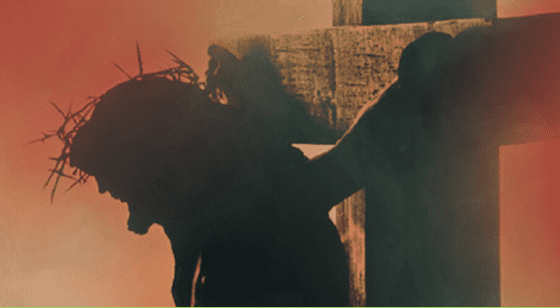
Good Friday of the Passion of the Lord
To The Epiphany Family
Passione Domini
Amor crucifixus, spes vivens: Crucified love, the
Living Hope of the World
(Good Friday of the Passion of the Lord, 03 April 2026)
By giving up his own Son for our sins, God manifests that his plan for us is one of benevolent love, prior to any merit on our part: In this is love, not that we loved God but that he loved us and sent his Son to be the expiation for our sins (1 John 4:10 and 19). God shows his love for us in that while we were yet sinners Christ died for us.
(Romans 5:8). (Catechism of the Catholics Church, 604).
Dear Brothers and Sisters of Epiphany: The Silence of the Cross in a Silent Neighborhood-Good Friday begins in silence—a silence that strangely echoes the quiet of our own neighborhoods, where pews are emptier, homes once filled with laughter now stand still, and many live unseen in the hidden suffering of old age, sickness, and abandonment.
The Cross stands not as a distant symbol, but as a presence within this silence. It is God’s answer to a world where voices fade and relationships thin. In Christ crucified, God enters the loneliness we often fear to name.
After a long pause, the old man said, “You know, I used to think I was completely alone… until I realized—He is the only one who truly understands what it is to be left behind.” That day, no long conversation followed. They simply sat together in silence before the Cross. And in that silence, loneliness became companionship, not because the situation changed, but because the Crucified Christ had already entered it.
Anecdote: The Forgotten Visitor– In a small town, an elderly man lived alone after his family had moved away. Once a week, a young volunteer from the parish visited him. On Good riday, the volunteer found him sitting silently before a small crucifix. After a long pause, the old man said, “You know, I used to think I was completely alone until I realized He is the only one who truly understands what it is to be left behind.” That day, no long conversation followed. They simply sat together in silence before the Cross. And in that silence, loneliness brcame companionship, not because the situation changed, but because the crucified Christ had already entered it.
Anecdote: The Nurse and the Cross-A nurse working in a hospice once shared that many patients, in their final days, did not ask for explanations, but for presence. One Good Friday, she placed a small crucifix in the hand of a dying patient who had no family left. The patient whispered, “So… He stayed too?” The nurse later reflected: “In that moment, I understood—Good Friday is not about solving suffering, but about never suffering alone.”
An Insight: (Hans Urs von Balthasar)-“The Cross is not the explanation of suffering; it is the companionship of God within it.”
Pastoral Food for Thought (Mother Teresa)-“Being unwanted, unloved, uncared for, forgotten by everybody that is a much greater hunger, a much greater poverty than the person who has nothing to eat.” (This connects profoundly with Good Friday: Christ enters precisely this poverty of being forgotten.)
Love That Comes Before Us-The mystery of Good Friday reveals a love that precedes all human deserving. “While we were yet sinners, Christ died for us” (Romans 5:8). This is not a love that waits to be invited; it is a love that arrives unbidden.
In neighborhoods where people feel forgotten or displaced, the Cross proclaims a radical truth: no one is abandoned by God. Divine love anticipates our need, meets us in our weakness, and remains faithful even when human bonds falter.
The Crucified Christ and the Elderly-In the frailty of Christ’s broken body, the elderly find not a reflection of decline, but a revelation of dignity.
The Cross transforms weakness into a place of encounter. Those who feel their strength diminishing are not forgotten; they are drawn closer to the mystery of Christ, who chose to save the world not through power, but through vulnerability. In every aging body, the Church is called to recognize the living icon of the Crucified.
Suffering Transfigured: Illness and the Mystery of Redemption-Good Friday does not remove suffering, but it transforms its meaning. Illness, which often isolates and diminishes, becomes through Christ a participation in redemptive love. The Cross reveals that suffering is not meaningless; it can become a place where love is deepened and offered. In the hidden rooms of hospitals and homes, Christ continues His Passion, inviting those who suffer to unite their pain with His for the life of the world.
Loneliness and the Cry of Dereliction-“My God, my God, why have you forsaken me?” (Matthew 27:46). In this cry, Christ enters the deepest human loneliness. He does not stand outside abandonment; He experiences it from within. For those who feel left behind as others move away, for those whose families are distant, the Cross becomes a companion. Christ’s abandonment means that no human loneliness is ever truly alone. He is present precisely where absence is most felt.
The Emptying of the Pew and the Wounded Body of Christ-The sight of empty pews can tempt us to despair, as though faith itself were fading. Yet Good Friday teaches us that apparent emptiness is not the end of the story. he disciples themselves scattered; the community seemed to dissolve. But from this fragmentation, a deeper communion was born. The Church, even when visibly diminished, remains the Body of Christ—wounded, yet alive, called not to measure success by numbers, but by fidelity.
Migration, Displacement, and the Via Crucis of Modern Life-As people move away from neighborhoods, leaving behind spaces once filled with shared life, we encounter a form of communal loss. Yet Christ Himself walked the path of displacement—the Via Crucis. He was led outside the city, rejected and cast out. In Him, all who experience uprooting find solidarity. The Cross becomes the place where every exile is gathered into a new belonging: the communion of those redeemed by love.
Caritas Crucis: The Call to Become What We Contemplate-To gaze upon the Crucified is not merely to reflect, but to be transformed. The love revealed on Good Friday is not static; it calls forth imitation. In neighborhoods marked by loneliness and fragmentation, the Christian vocation becomes clear: to be present, to accompany, to serve. The washing of feet on Holy Thursday finds its fulfillment on Good Friday in the total gift of self. We are called to become living signs of crucified love for one another.
Hope Born from the Cross-Good Friday is not the negation of hope, but its deepest foundation. Hope here is not optimism, but trust in a love stronger than death. In a world where decline, illness, and absence seem to prevail, the Cross proclaims that love endures. The apparent defeat of Christ is, in truth, the victory of divine fidelity. This hope does not deny suffering; it passes through it and transforms it.
The Parish as a Community of the Cross-Pastorally, Good Friday invites the parish to rediscover itself not as a place of mere gathering, but as a communion of care. The empty pew becomes a call to seek out the absent; the lonely home becomes a place of visitation; the suffering neighbor becomes Christ Himself. The Church is most fully herself when she mirrors the love of the Cross—when she bends low to serve, to listen, and to remain present.
Amor Usque ad Finem: Love to the End-“Having loved his own who were in the world, he loved them to the end” (John 13:1). Good Friday is the fulfillment of this love without limit. It is a love that does not withdraw in the face of suffering, but remains steadfast. For every person who feels left behind, this is the ultimate proclamation: you are loved to the end. Not conditionally, not temporarily, but eternally.
Cumulative Summary (Good Friday – Amor crucifixus, spes vivens)-Good Friday reveals that the Cross of Christ stands at the very heart of our present human condition—within neighborhoods marked by aging, sickness, loneliness, displacement, and diminishing communities. In the silence of the Cross, God enters the quiet suffering of empty homes and empty pews, transforming absence into presence. The crucified Christ embodies a love that precedes all merit (amor praeveniens), assuring us that no one is forgotten, even when human relationships fade. In the frailty of His broken body, the elderly discover their enduring dignity; in illness, suffering is not erased but given redemptive meaning; and in loneliness, Christ’s own cry of abandonment becomes a profound solidarity with all who feel left behind. The Cross also speaks to the fragmentation of communities: just as the disciples scattered, so too our neighborhoods experience dispersion, yet from this brokenness God forms a deeper communion. Displacement and migration find their meaning in Christ’s own journey outside the city, where every exile is gathered into a new belonging. Good Friday thus calls the Church to become what she contemplates—to embody caritas crucis, a love that accompanies, serves, and remains present. Ultimately, the Cross is not the end but the beginning of hope: spes vivens—a living hope rooted not in circumstances, but in a love stronger than death. In this way, even the most silent and wounded spaces of our world are transformed into places where crucified love quietly gives birth to new life.
Conclusion: From Crucified Love to Living Hope-As we venerate the Cross, we do not merely remember an event; we encounter a living mystery. The Cross stands in the midst of our neighborhoods, our homes, and our hearts, declaring that no suffering is unseen, no loneliness unheard, no life without value. Amor crucifixus, spes vivens—Crucified Love becomes Living Hope. And from this hope, even the most silent places can begin to breathe again:
On Calvary’s height beneath a darkened sky, The Son of God is lifted up to die.
Abandoned, yet embracing all who grieve, He holds the hearts that no one else receives.
The aged, frail, the sick, the cast aside, Find in His wounds a place where they abide.
No lonely tear is lost upon this tree, Each drop is held in divine memory.
The silent pew, the home now left behind, Are gathered in His ever-faithful mind.
O Cross of Christ, where broken lives are one—From death’s deep night, the dawn has now begun.
Fraternally,
Fr. John Peter Lazaar SAC, Pastor